The demand for energy-efficient commercial buildings is stronger than ever. With rising energy costs, tightening regulations, and growing environmental awareness, developers and investors are increasingly recognising the financial and reputational benefits of smart, sustainable design. Today, energy efficiency is not only about reducing carbon footprints – it is about creating long-term value, cutting operational costs, and delivering competitive advantages.
In this article, we explore how energy-efficient design impacts commercial property, the strategies architects and developers use to achieve it, and why it appeals strongly to investors seeking both profitability and resilience.
Why Energy Efficiency Matters in Commercial Buildings
Commercial properties consume vast amounts of energy for lighting, heating, cooling, and operations. According to international studies, buildings account for nearly 40% of global energy consumption and a third of greenhouse gas emissions. For developers and investors, the implications are clear:
- Rising operational costs: Energy bills are a significant expense for tenants and owners.
- Regulatory compliance: Stricter energy performance standards are being enforced worldwide.
- Market demand: Tenants increasingly prefer sustainable office spaces that align with corporate ESG (Environmental, Social, Governance) commitments.
- Investment security: Energy-efficient buildings retain higher values, attract premium tenants, and are less exposed to regulatory penalties.
Ultimately, energy-efficient commercial design is not an optional add-on but a financial and strategic necessity.
1. Smart Building Design as a Cost-Saving Tool
Architectural design choices made early in a project’s lifecycle have the biggest impact on long-term efficiency. Smart design focuses on passive and active strategies that reduce energy needs while enhancing user comfort.
Passive Design Principles
- Building orientation: Positioning to maximise natural daylight while minimising overheating.
- High-performance insulation and glazing: Reducing heat loss and improving indoor comfort.
- Natural ventilation: Harnessing prevailing winds and cross-ventilation to reduce reliance on HVAC systems.
- Shading devices: Overhangs, louvres, and brise-soleil reduce solar gain in summer.
Active Design Strategies
- Efficient HVAC systems: Incorporating variable-speed drives, heat recovery, and demand-based controls.
- Smart lighting: LED systems combined with motion sensors and daylight-responsive controls.
- Building automation systems (BAS): Real-time energy monitoring and optimisation.
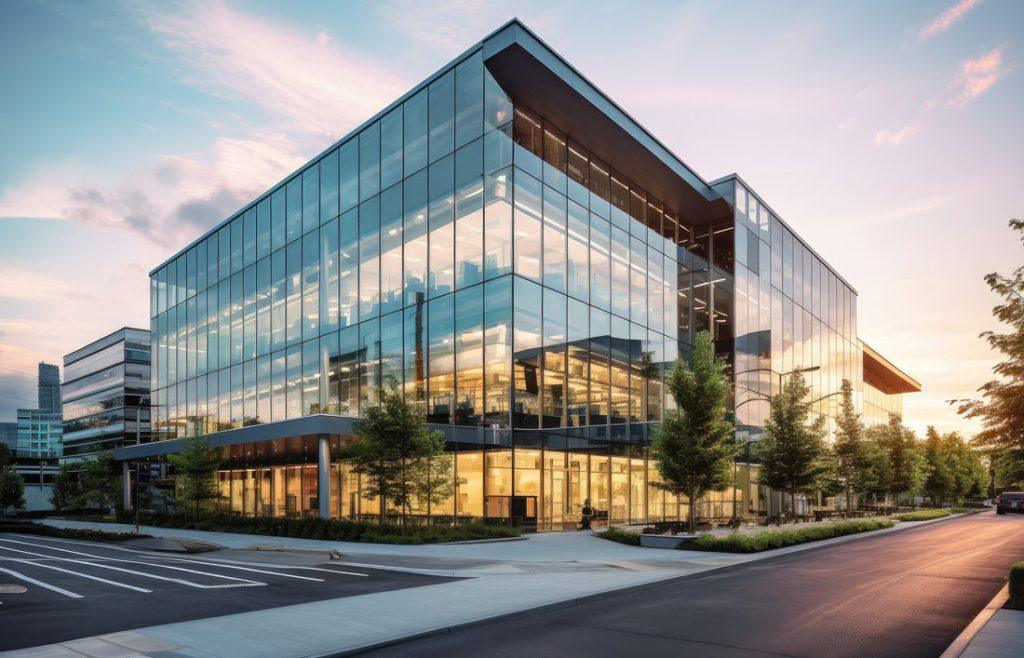
When passive and active measures are combined, operational costs are dramatically reduced while maintaining a high-quality occupant experience.
2. Energy-Efficient Materials and Technologies
Developers today have access to a wide range of materials and technologies designed to cut energy use. Some of the most impactful include:
- Low-emissivity (Low-E) glass: Minimises heat transfer while allowing daylight.
- Phase-change materials (PCM): Store and release heat, stabilising indoor temperatures.
- Green roofs and walls: Improve insulation, reduce heat island effect, and manage rainwater.
- LED and smart lighting systems: Use up to 80% less energy than conventional lighting.
- On-site renewable energy: Solar panels, wind turbines, and geothermal systems provide clean power and reduce grid dependency.
The combination of high-performance materials and renewable technologies ensures both sustainability and cost savings.
3. The Financial Case for Developers and Investors
While energy-efficient buildings often require higher upfront investment, the return on investment (ROI) is clear:
- Lower operating costs: Reduced energy bills improve net operating income (NOI).
- Higher rental yields: Tenants are willing to pay premiums for sustainable office spaces.
- Increased property value: Energy-efficient buildings hold stronger resale values.
- Reduced vacancy rates: ESG-conscious tenants prioritise efficient, green-certified spaces.
- Access to green finance: Investors benefit from preferential lending terms, tax incentives, and grants.
A 2023 CBRE report showed that certified energy-efficient buildings achieve rents up to 11% higher and have sale prices up to 25% higher than non-certified counterparts. For investors, this translates into long-term stability and reduced risk.
4. Green Building Certifications and Investor Appeal
Energy efficiency is increasingly tied to green building certifications that enhance credibility and marketability. Leading certifications include:
- LEED (Leadership in Energy and Environmental Design)
- BREEAM (Building Research Establishment Environmental Assessment Method)
- WELL Building Standard (focused on occupant health and wellbeing)
- ENERGY STAR
For developers and investors, these certifications provide:
- Independent proof of sustainability performance.
- Marketing advantages to attract premium tenants.
- Enhanced access to global investment markets where ESG credentials are mandatory.
Certification not only validates energy efficiency but also signals quality, resilience, and future-proof design.
5. Technology and Smart Building Management
The rise of smart buildings is revolutionising energy efficiency in commercial architecture. By leveraging data, AI, and IoT (Internet of Things), developers are creating buildings that continuously adapt and optimise performance.
Smart Technologies in Action
- IoT sensors monitor occupancy and adjust lighting/HVAC.
- Predictive maintenance systems reduce downtime and extend equipment life.
- Automated shading and climate control that respond to weather conditions.
- Data analytics dashboards providing real-time energy insights for owners and tenants.
Smart building management transforms efficiency from a static design feature into a dynamic, ongoing benefit that maximises ROI.
6. Case Studies – Success Stories in Energy-Efficient Design
The Edge, Amsterdam
Often described as the “greenest office building in the world,” The Edge uses smart technology, solar power, and efficient design to reduce energy consumption by 70% compared to similar buildings. It has attracted top-tier tenants like Deloitte, proving that sustainability and profitability go hand-in-hand.
Bloomberg HQ, London
Awarded the title of the world’s most sustainable office building, Bloomberg’s London headquarters achieves a 73% reduction in water use and 35% reduction in energy consumption compared to standard offices. Its BREEAM Outstanding rating demonstrates how energy efficiency can align with world-class design.
Salesforce Tower, San Francisco
Designed with high-performance glazing, natural ventilation, and advanced energy systems, Salesforce Tower exemplifies how large-scale developments can balance sustainability with tenant satisfaction and profitability.
These examples demonstrate that energy-efficient buildings consistently outperform their conventional counterparts in both financial and operational terms.
7. Overcoming Barriers to Energy Efficiency
Despite the clear advantages, some developers hesitate due to concerns about upfront costs and complexity. However, these challenges can be addressed:
- Lifecycle cost analysis: Demonstrates long-term savings that outweigh initial investments.
- Government incentives: Subsidies, tax credits, and grants reduce capital expenditure.
- Modular implementation: Energy-efficient measures can be phased in gradually.
- Investor pressure: Growing demand for ESG-aligned portfolios makes efficiency unavoidable.
By reframing energy efficiency as a long-term investment rather than a short-term expense, developers and investors can unlock greater profitability and resilience.
Conclusion
Energy-efficient commercial buildings are no longer a niche interest – they are the future of real estate development. Through smart design, innovative materials, and intelligent technologies, architects and developers can significantly reduce operational costs, enhance tenant satisfaction, and boost property value. For investors, the appeal lies in cost savings, market demand, and long-term security.
The message is clear: energy efficiency is not just about environmental responsibility – it is about financial performance and competitive advantage. Developers and investors who embrace smart, energy-efficient design are not only contributing to a sustainable future but also ensuring strong, resilient returns on their investments.